Some months ago (pre-Pandemic), I was at A Novel Ideal book store. On their “New Arrivals” shelf was a hefty, worn, leather-bound tome. Of course I picked it up.
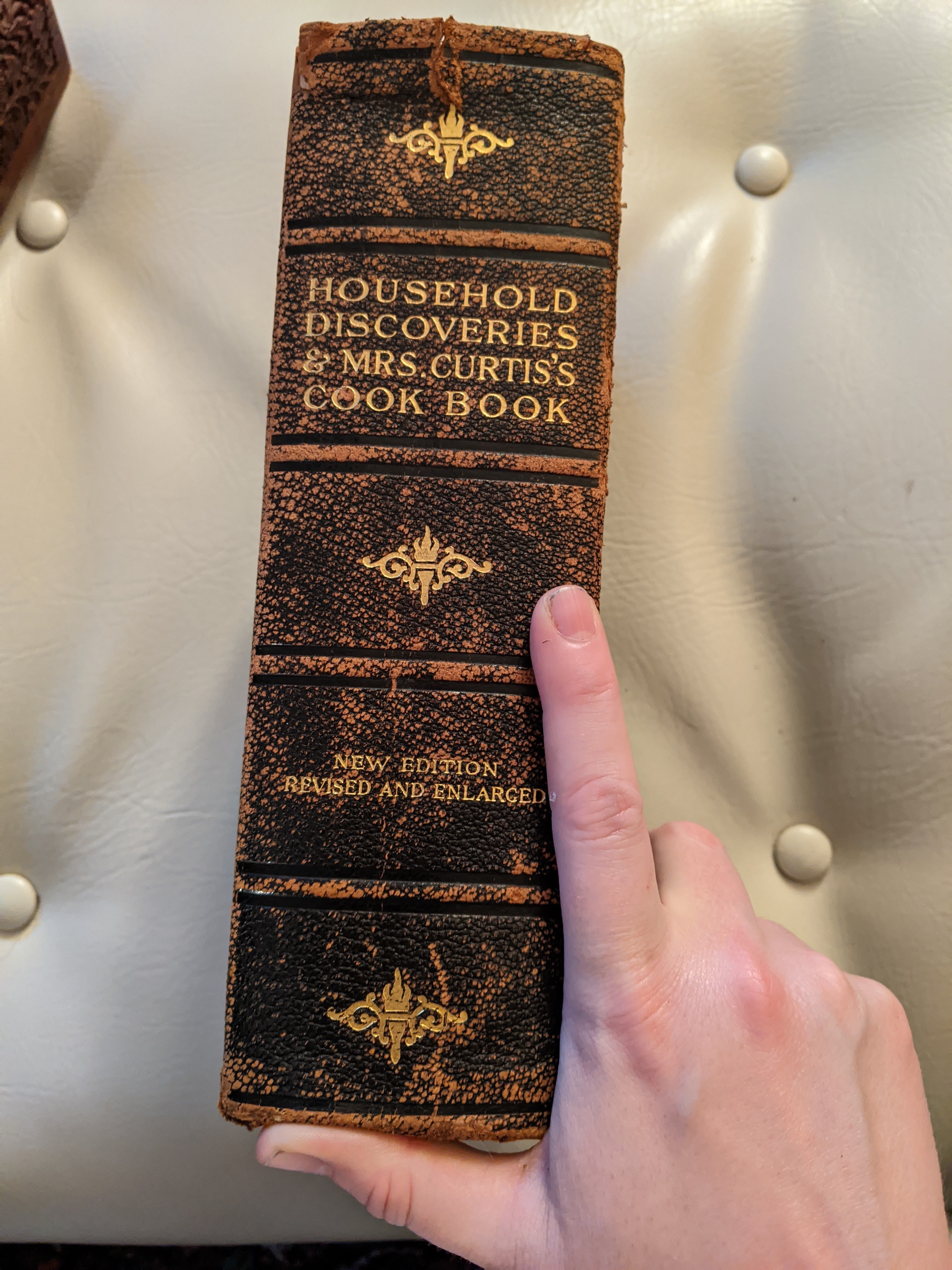
As I flipped through the first few pages, my curiosity was piqued. It wasn’t, primarily, a cookbook. It was nothing more or less than a complete manual for the science of housekeeping in the early 20th century. The book was originally published in 1908, but I had the “Revised and Expanded” 1914 edition.
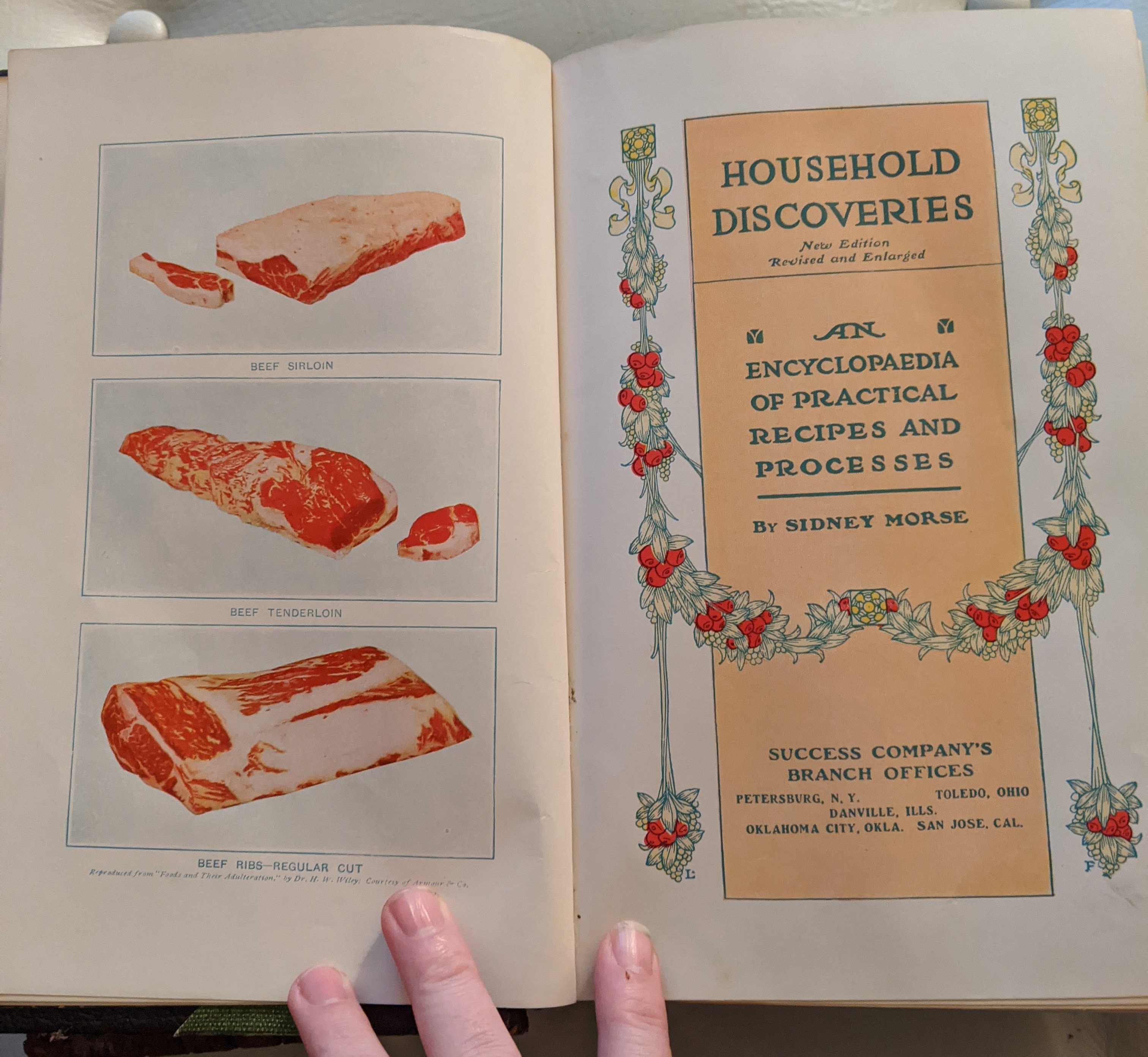
It was $20, so obviously I bought it. Even in the first pages, before we get to the “meat” of the book (no pun intended in conjunction with the above image), it is evident this is a relic from another era. There is an ad explaining that this book is only available from door-to-door salespeople, and you can be one if you are interested! “The price of Household Discoveries, because if its genuine worth (so apparent), sells the book readily and it always gives satisfaction. The work is both pleasant and profitable.”
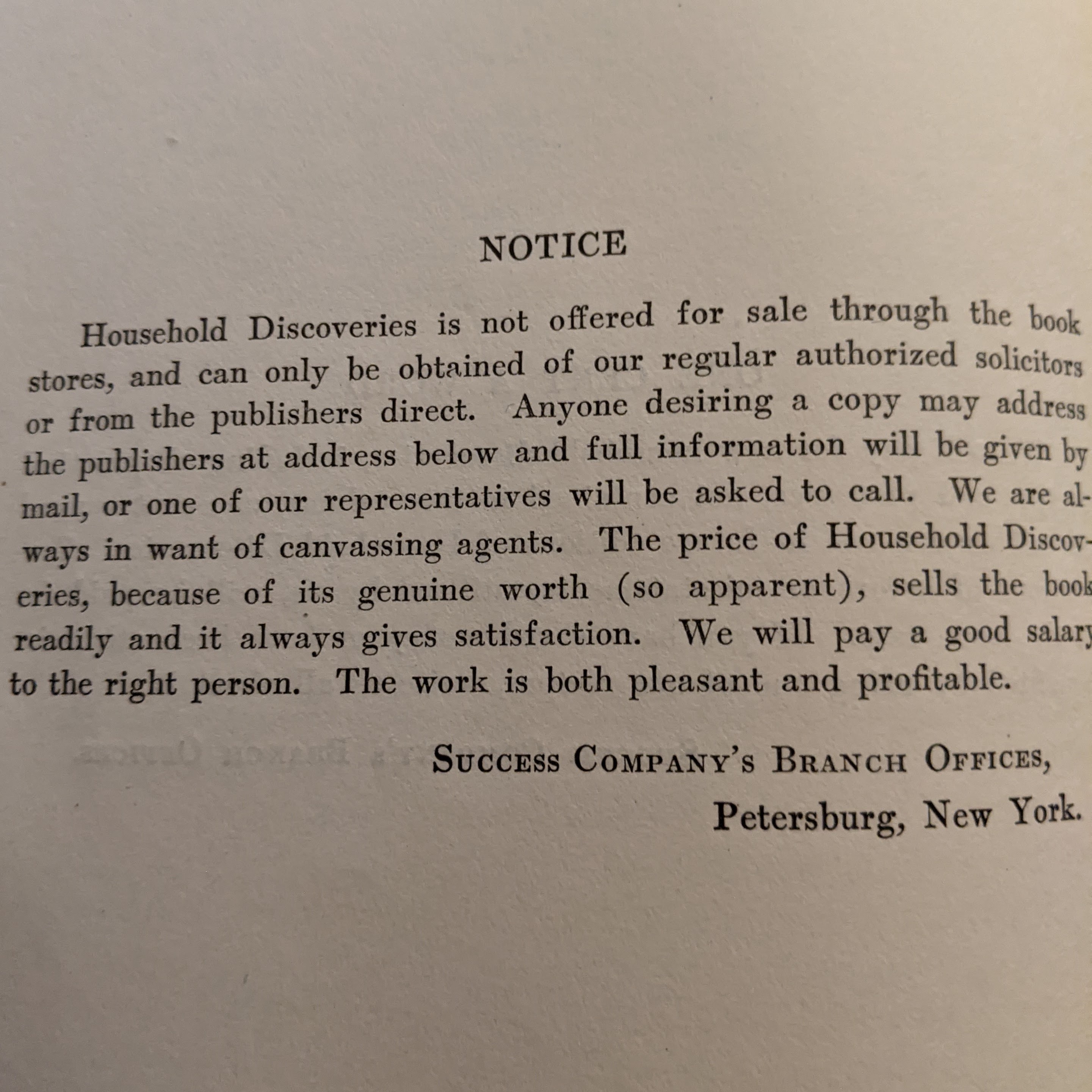
They will pay for contributions, at a penny a word!! (Elsewhere, the author notes they rewrote everything in their own words, so I suspect no pennies were sent out.)
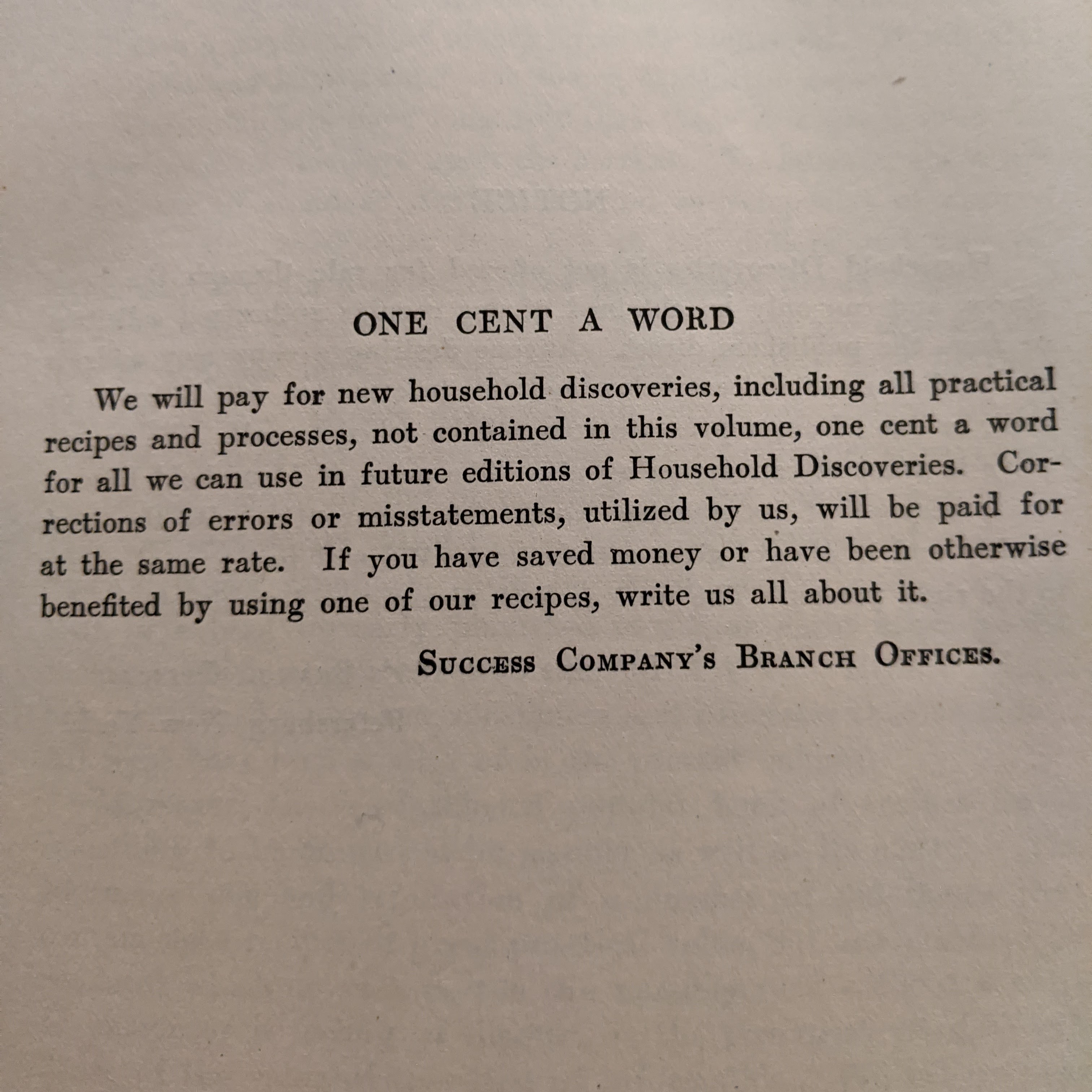
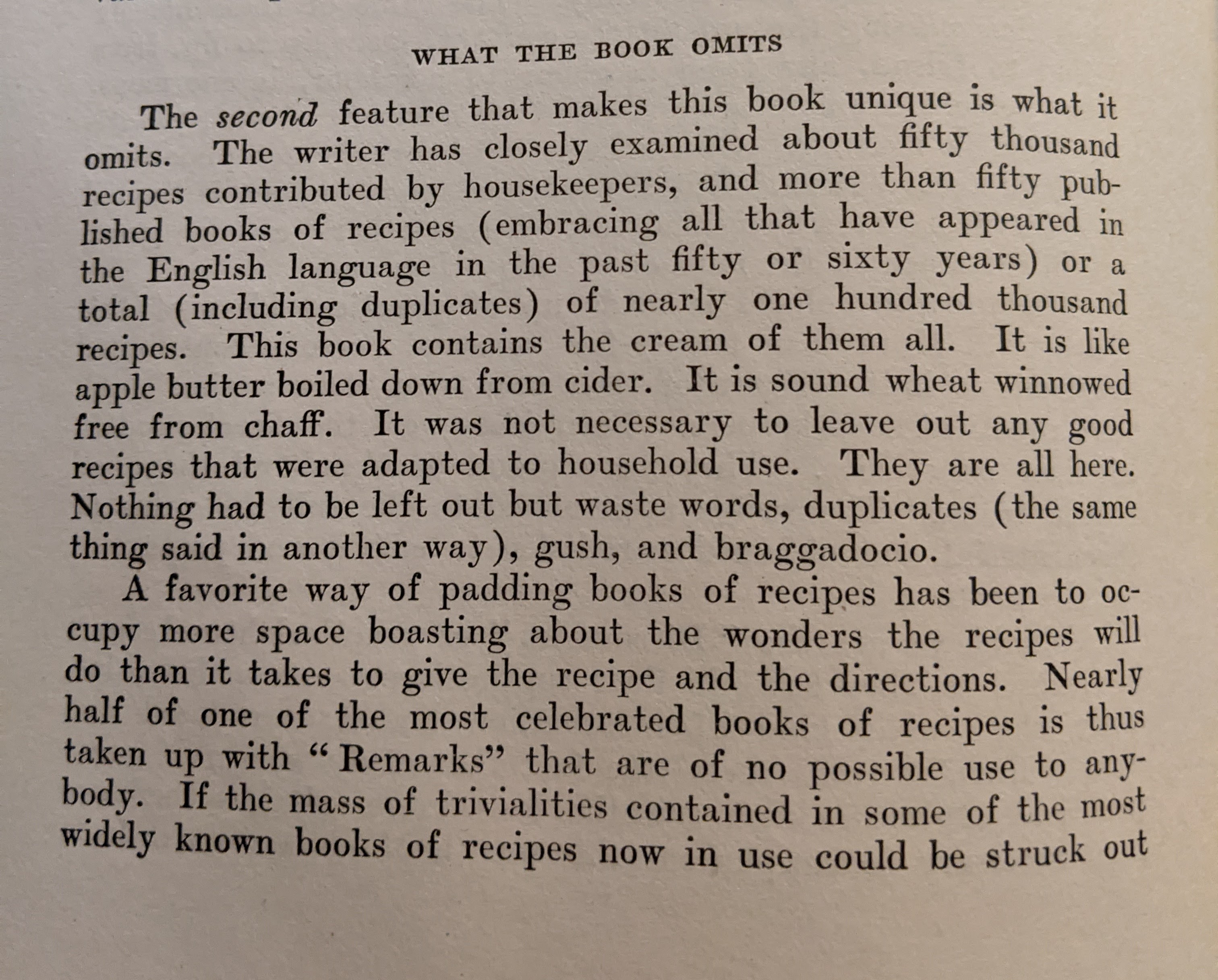
I was struck by this paragraph. Can you imagine, in 2020, closely examining every cookbook published in English in the last fifty or sixty years?? But in 1914, I guess that was only about fifty books? That certainly says something about how industrialization, consumerism, and access have changed in the last 106 years. I also appreciate that apparently people have been making the recipe blog complaint of “stop telling me a story and get to the recipe!!” for a century, at least.
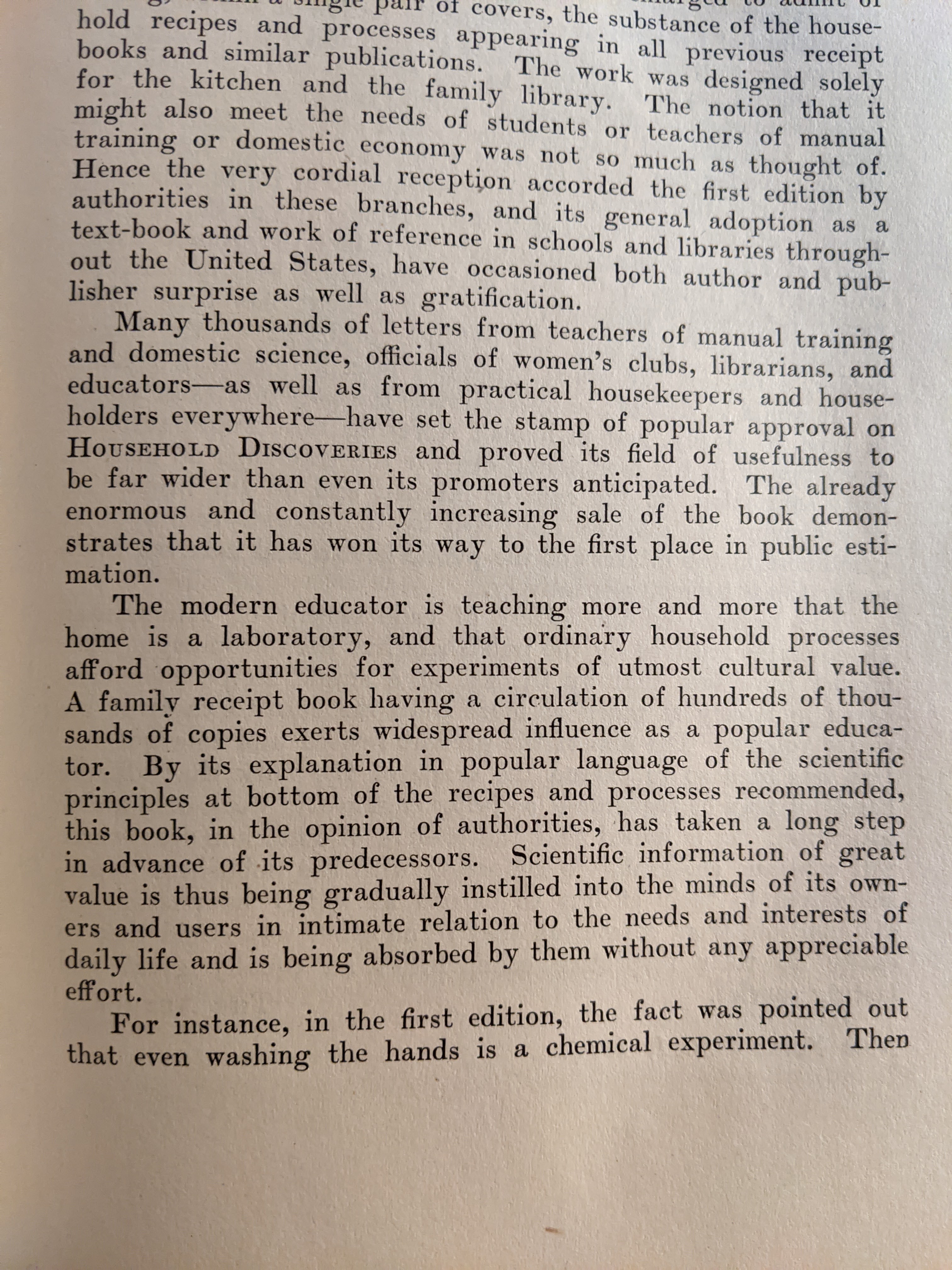
One of the things I find fascinating about housekeeping prior to second-wave feminism is the framing of housework as science. Science isn’t just for industry and business (men). Science is also for the home. Women’s work is science. “Even handwashing is a scientific experiment!” Living in a house built in 1956, I see how this plays out in a midcentury way. My home was built to be a factory, where the item produced wasn’t widgets, but a “happy family”. Things from the floorplan to the placement of outlets become choices to optimize the productivity of the person doing the housework.
For example, I can vacuum the whole house with two outlets: One that allows me to do the main room, entry, and front hall, and another that lets me reach the library and all the bedrooms. The first is placed conveniently near the door in the main room, the other in the back hallway. Many words have been written on this by folks more educated in the matter than I do, but as a feminist I do think it’s interesting to track the journey of framing housework as “science” and the home as a factory.
Thus concludes my thoughts from the introduction. The first chapter is about furnishing the home: wallpaper, floor coverings, furniture, and so on. It will get its own post. But reading over a description of home decor in 1914 is like a dispatch from another world!
 Notebook